
China Runs Fast. Agentic Commerce Runs on Protocols.
A six-month journey from dancing humanoids to the layer that actually powers commerce.

Last week, a humanoid robot ran the 100 meters in 9.39 seconds at the World Humanoid Robot Games in Beijing; faster than Usain Bolt’s human world record of 9.58. A year ago, the best machine on that same track needed 21.5 seconds. Twelve seconds shaved off in twelve months.
It’s a striking number, and it’s tempting to read it as a leap toward general-purpose robots. It isn’t. These are highly specialized competition machines built to do exactly one thing at speed. They sprint. They don’t fold laundry, restock a shelf, or hold a conversation. The right response is to be impressed and to keep perspective at the same time because the number that matters most in China’s AI story isn’t measured in seconds.
A story that started with a dance
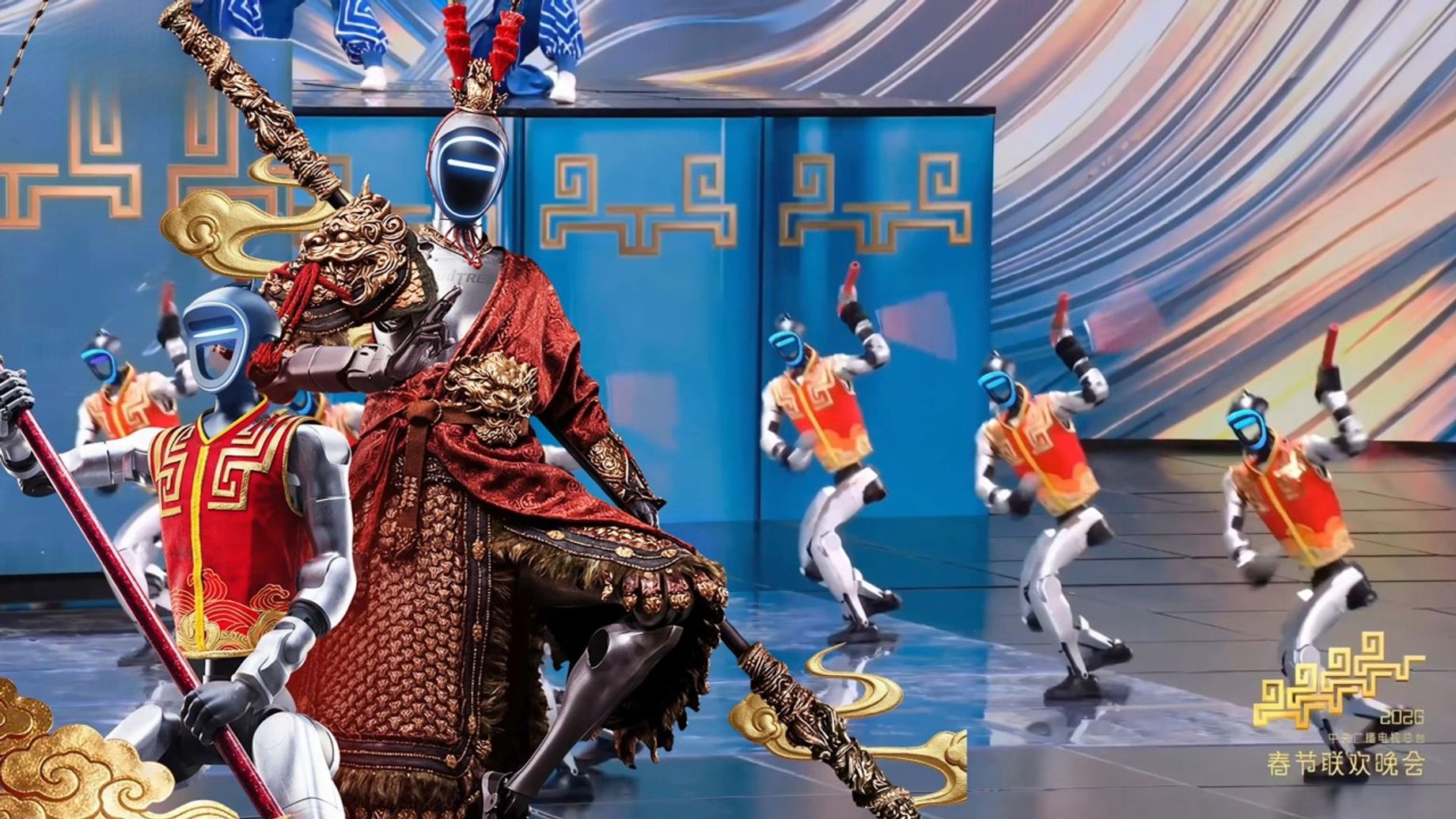
Our own six months began earlier, around the Chinese Spring Festival, when humanoid robots danced their way onto screens across the world. It was playful, a little uncanny, and difficult to look away from. What looked like entertainment was really a signal: Embodied AI moving from the lab into public, cultural, everyday space. By April, our founder, Philipp, was on the ground in China for the AI + Manufacturing conference, and the signal got much louder.
What Philipp saw in China
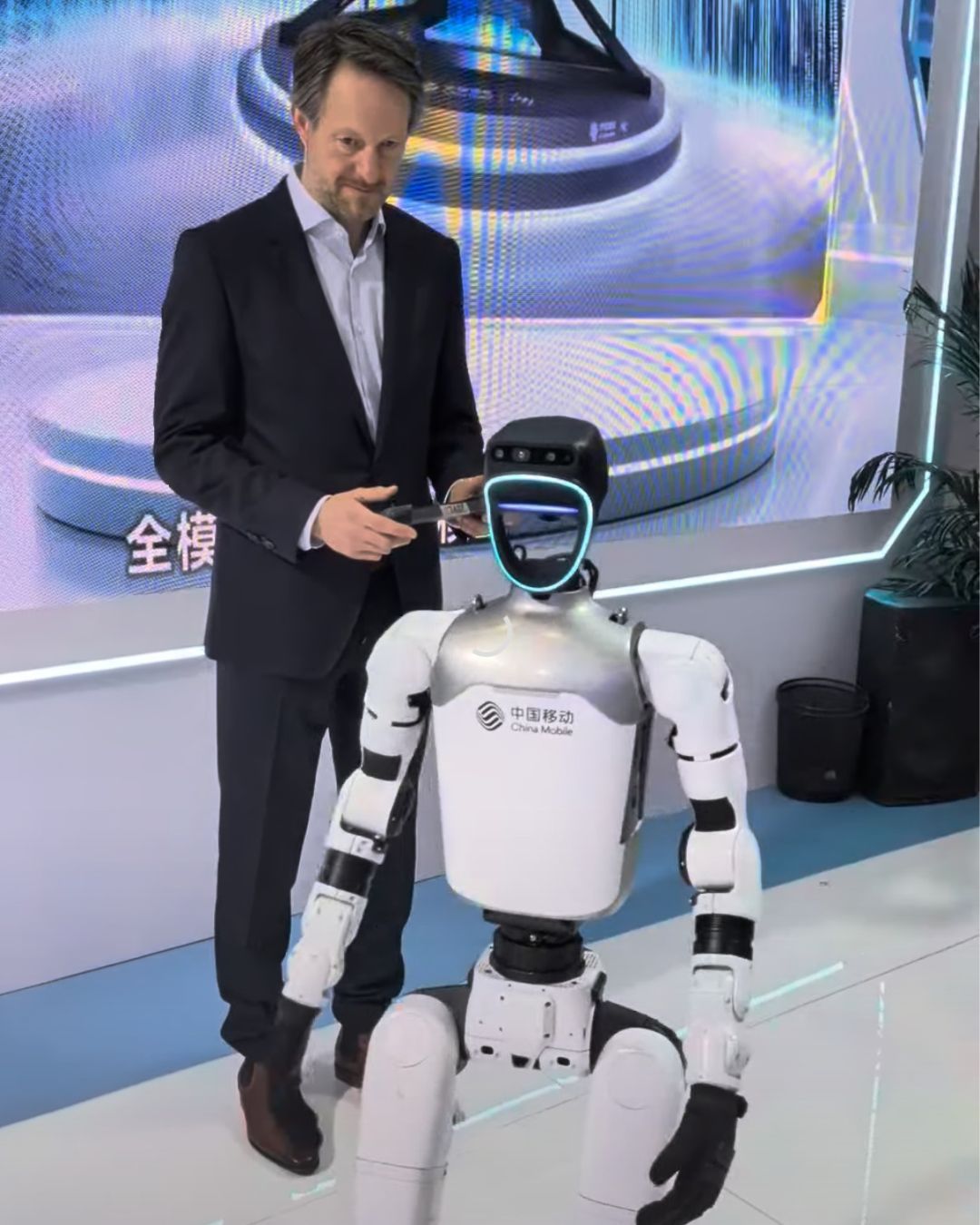
Two things stood out.
The first was a face-to-face encounter with Unitree Robots, one of the companies turning humanoid hardware from spectacle into product. Seeing these machines up close, outside a stage show, changes the conversation. You stop asking if digital agents become physical and start asking, “How fast and for which use cases?”
The second was the money and the direction behind it. The conference featured a signing ceremony for a dedicated AI industry fund on the order of 5 billion RMB.
That’s not a marketing budget; it’s a bet on infrastructure. And the bets China is making are clear enough to name: Robotics for an aging society and digital agents that step out of the screen and into the physical world.
Both of these have stayed with us since. They’re not predictions, they’re the direction of travel.
The real race is the one you can’t see
Here’s the part the sprint record hides. The visible layer of AI - the robots, the demos, the record times - is the easy part to photograph.
The hard part, the part that decides who actually wins in agentic commerce, is invisible: the connective tissue that lets AI systems do things across platforms, brands, and transactions.
That connective tissue is the protocol layer. When an AI agent has to look something up, take an action, complete a purchase, or hand off to another system, it needs a common way to talk to the tools and data around it.
Get that layer right and agents become useful. Get it wrong and you’ve built a very fast robot that can’t tie its own shoes, figuratively speaking.
The Interface for Agents is MCP
At vviinn, we’ve made our call: MCP first.
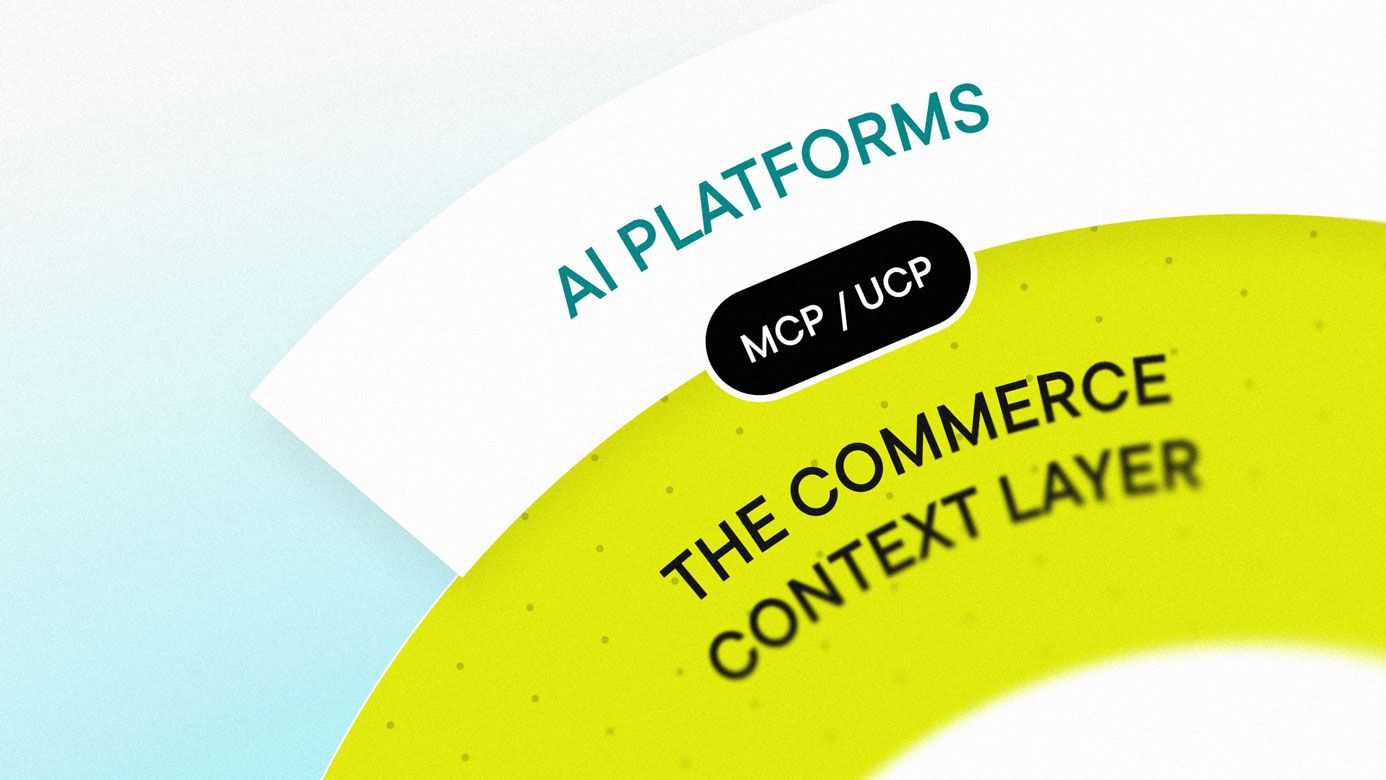
The Model Context Protocol (MCP) is fast becoming the default way AI agents connect to tools, data, and actions: the layer that sits between AI platforms and the commerce context beneath them.
For years, integration meant wiring up one custom API after another. That model doesn’t scale in a world where agents, not humans, are the ones reaching for the connection.
MCP flips it: instead of building a bespoke API for every integration, you expose your capabilities once, and any agent can use them.
That’s why we say MCP is the new API. Not because APIs disappear overnight, but because the default is changing. The API was built for developers calling functions. MCP is built for agents taking actions.
But MCP alone is only the foundation. It’s the ideal transport layer for connectivity: the how of getting agents and tools to talk to each other. Agentic commerce needs something more: a standard for the what, the business and transaction logic behind an actual sale. That’s the Universal Commerce Protocol (UCP).
The two don’t compete; they stack.
UCP is transport-agnostic and runs on top of MCP. So there’s no choosing between them. MCP provides the channel; UCP handles the commerce that flows through it, from the cart to the payment. MCP supplies the universal infrastructure. UCP supplies the commerce standard.
Which makes our strategy simple to state: MCP for connectivity, UCP for commerce.
What China’s speed really tells us
So, back to that 9.39-second robot. Take it as what it is: proof of how fast things move when a country decides to move. The sprint is the visible edge of a much deeper build: funds, factories, and a clear direction toward physical, agentic AI.
But speed on a track isn’t the same as capability in the world. The agents that matter won’t be the ones that run fastest; they’ll be the ones wired into a context layer that lets them actually do something. That layer is being built right now, in protocols rather than press photos. We’re building for it. MCP first.
Is your team already going all-in on MCP for agentic integrations, or are you still watching the protocol race from the sidelines?
Tell us. We would like to hear from you.
Related Posts

Joining Forces for Conversational Commerce: Announcing Our Solution with moinAI
