 Back to Blog
 Why traditional search no longer reflects how we shop
Home & Living ecommerce is outgrowing traditional keyword search. As shoppers think in styles and visual inspiration, AI-driven discovery is redefining how products are found.

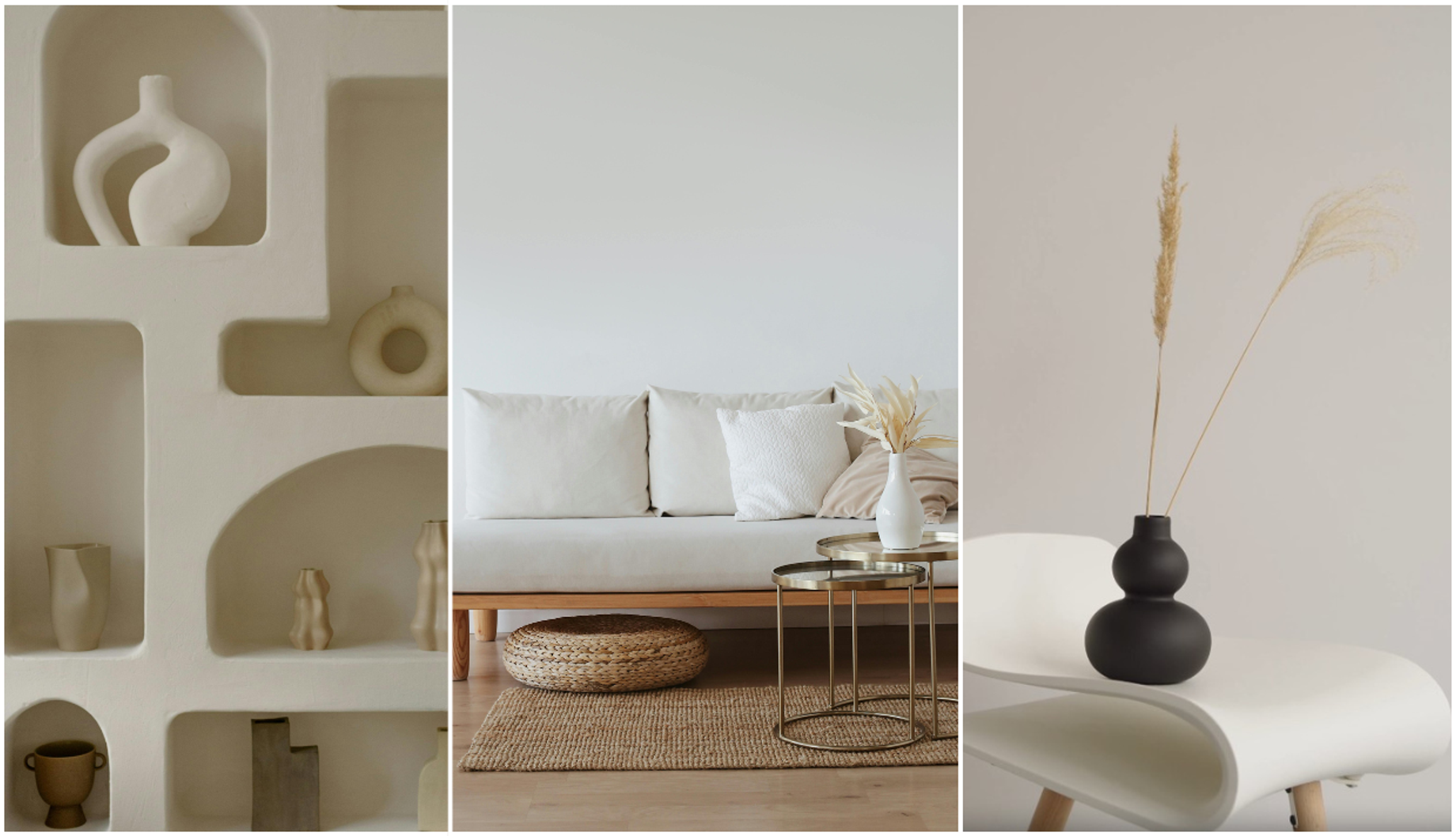
The structural mismatch between Search, UX and real customer buying behavior.
Home and living ecommerce continues to grow across Europe, representing a market worth over €300 billion annually, with online sales now accounting for approximately 25–30% of total category revenue and increasing year over year. Yet many businesses are encountering the same limiting factor: product discovery has not evolved at the same pace as customer behaviour.
Today’s shoppers do not think in SKUs, category trees, or exact product names. They think in spaces, styles, use cases, and visual references:
- “A sofa like the one I saw on Instagram”
- “A dining table that fits this room”
- “Something similar, but lighter wood and smaller”
Yet most ecommerce search experiences still rely heavily on keyword-based logic and rigid filtering, creating a disconnect between intent and results.
This gap between how customers search and how systems respond has become one of the largest UX and conversion bottlenecks in home and living ecommerce.
Why “Search” No Longer Describes How Customers Discover Home & Living Products
In Home & Living commerce, customers rarely begin with a precise product in mind. They begin with an intention: to make a space feel warmer, calmer, more functional, or more personal.
Most ecommerce systems still rely on a search logic designed for exact matches keywords, filters, and predefined categories.
This mismatch creates a structural problem.
1. Keyword search fails to support exploratory, conversational intent.
In home and living, shoppers are rarely searching for one exact item. They usually have a clear goal — a type of product, a style, or a space to furnish — but expect a process that helps them refine options along the way. A search for “modern lamp” often returns an overwhelming mix of results, while queries like “something like this, but lighter and smaller” cannot be expressed through keywords at all.
Customers are not lacking intent; they are lacking a search experience that can interpret, refine, and respond conversationally.
2. Large catalogues overwhelm shoppers.
Home and living retailers manage vast assortments with minor variations in size, finish, or material. Customers are forced to navigate deep categories, apply multiple filters, and scroll through near-identical products.
Impact: Browsing fatigue, reduced engagement, declining conversion — especially on mobile.
3. Inspiration is disconnected from purchase.
Shoppers often arrive inspired by editorial content or social media imagery, where entire rooms or styled scenes create desire not individual products. Yet ecommerce experiences still require shoppers to search for each item separately.
4. Lack of confidence stalls conversion.
When shoppers are unsure whether a product fits their space or matches the rest of the room, hesitation sets in. Without clear context or reassurance, many abandon carts or continue their search elsewhere.
How can vviinn help solve Product Discovery and UX Challenges in Home & Living Commerce.
vviinn provides a composable, AI-powered discovery layer designed to replace rigid search logic with intent-driven experiences without requiring replatforming.
Visual Search: When Customers Can’t Describe What They Want
Home and living is inherently visual. With visual search, customers can upload an image from a magazine, social media post, or real-world environment and instantly discover similar or matching products from your catalogue.
Value for retailers:
- Shorter path from inspiration to purchase
- Higher engagement from design-led shoppers
- Improved discovery for long-tail products
Multimodal Search: Combining Text, Image, and Context
Shoppers often combine partial knowledge with visual references:
“Something like this, but in oak,” or “same style, smaller size.”
Multimodal search allows customers to express intent using images, natural language, and refinements together, producing significantly more accurate results than keyword search alone.
Value for retailers:
- Reduced mis-orders and returns
- Higher shopper confidence
- Better performance across languages
Shop the Look: Turning inspiration into Shoppable Experiences
Home environments are rarely purchased item by item. With Shop the Look, retailers can make entire rooms, styled scenes, or editorial imagery fully shoppable allowing customers to buy coordinated sets in just a few clicks.
Example:
A retailer publishes a styled bedroom image.
With Shop the Look, customers can:
- View every product in the scene
- Purchase coordinated sets in a few clicks
Impact:
Higher average order value, better use of lifestyle content, and a UX that mirrors how people actually shop for their homes.
Business Outcomes for Home & Living Retailers: Why It Matters.
Modernising search and product discovery is not a UX enhancement it is a direct growth lever. When customers can find what they are looking for quickly and confidently, the impact is felt across the entire ecommerce operation.
By improving search and discovery, Home and living retailers can achieve:
Fewer zero-result searches, ensuring that customer intent is consistently matched with relevant products, even when queries are vague or visually driven.
Higher conversion from inspiration-led traffic, by connecting editorial content, social media, and lifestyle imagery directly to purchasable products.
Increased basket sizes, as customers are encouraged to buy complete looks, room sets, or coordinated product combinations rather than individual items.
Lower customer support dependency, as clearer discovery and higher confidence reduce pre-purchase questions and post-purchase issues.
Stronger differentiation from marketplaces, through branded, inspiration-led experiences that go beyond price-driven comparison.
Most importantly, modern search replaces friction with confidence. Instead of forcing shoppers to adapt to rigid systems, retailers enable discovery experiences that feel intuitive, relevant, and aligned with how people actually shop for their homes, building trust, loyalty, and long-term value.
Conclusion: Fixing Search Fixes Commerce
Home and living ecommerce does not suffer from a lack of products or inspiration. It suffers from outdated discovery experiences that force customers to adapt to systems instead of the other way around.
By investing in AI-powered discovery, retailers can turn visual inspiration into conversion, reduce friction across the customer journey, and build scalable, future-ready ecommerce experiences that evolve with customer behavior.
Search and UX are no longer peripheral features, they are core revenue drivers.
vviinn helps home and living ecommerce businesses align product discovery with real customer behaviour, transforming images, intent, and inspiration into measurable commercial outcomes.
Ready to fix product discovery in your ecommerce experience? Contact vviinn to learn how our AI-powered search and discovery can help.
Related Posts

Beyond the Search Bar: How Smart Autosuggest Drives ROI in Commerce
